How to Build a Believable Fantasy World (Without Info-Dumping)
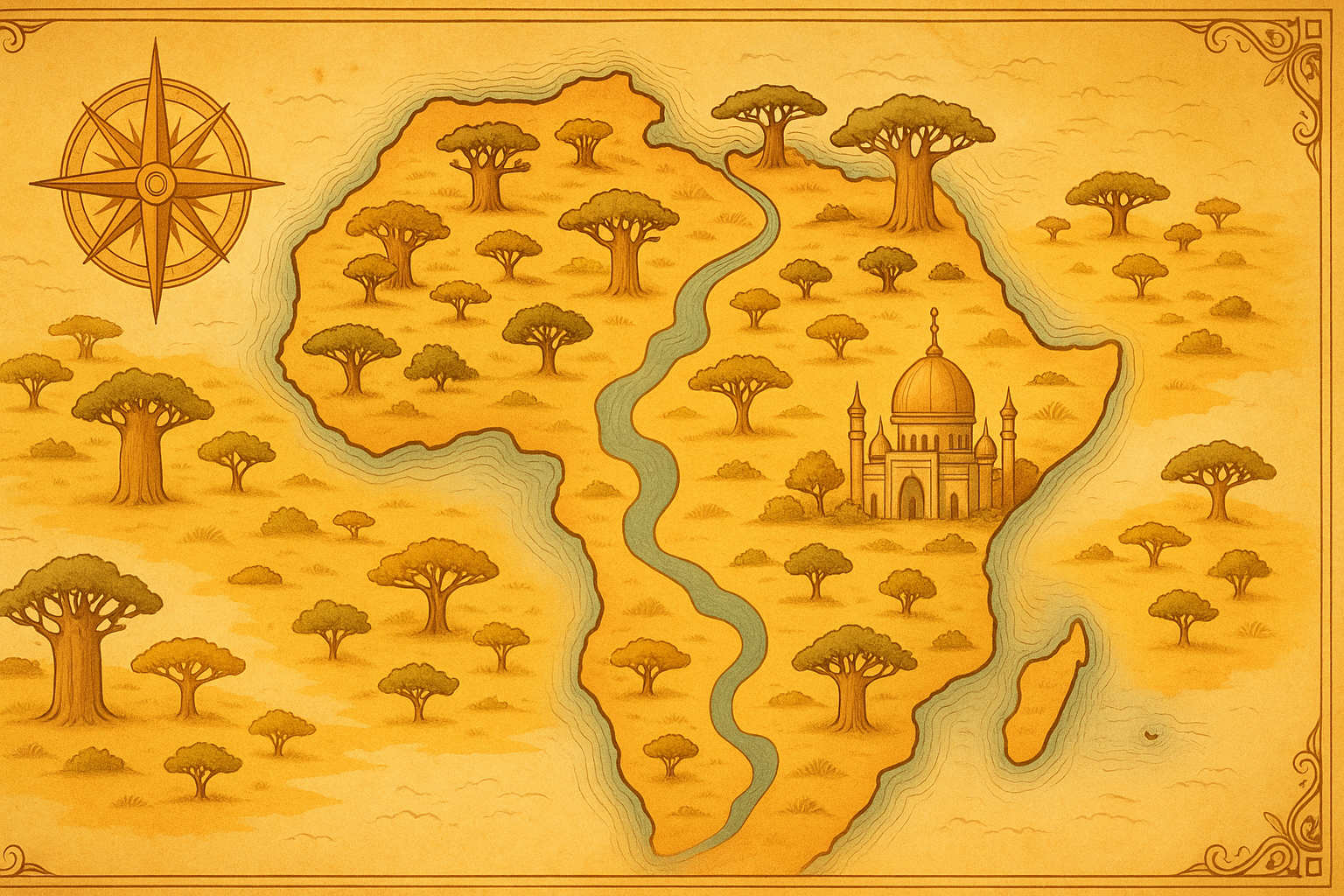
Every writer who has ever fallen in love with a fantasy world wants to build one of their own — and then promptly buries the reader alive under six paragraphs about the Council of Thirteen Provinces before anyone has said a word. A believable world is not the one with the most lore. It is the one that feels lived in, revealed at the exact moment you need it and not a sentence sooner.
So let us build a world that breathes — and learn to keep ninety percent of it hidden.
The Iceberg Principle: Know Everything, Show Almost Nothing
Picture an iceberg drifting off the coast of somewhere cold and strange. The reader only sees the tip glinting above the water. But the tip only looks solid, dangerous, and real because of the enormous mass beneath it that nobody can see.
That is your world. The vast frozen bulk underneath is your private knowledge: the trade routes, the failed rebellions, the god who went quiet three centuries ago. The tip poking through the surface is what actually lands on the page — a single distrustful glance between a market woman and a soldier, a coin that no one in the northern city will accept.
You are not writing an encyclopaedia. You are writing the two lines that prove the encyclopaedia exists.
The magic here is confidence. When Ada, your heroine, ducks under a low doorway "the way everyone learns to in the salt-quarter," you have told the reader that the salt-quarter has a culture, an architecture, and a set of habits — without a single page of explanation. They feel the depth even though you only showed them the doorway. That is the whole trick.
Decide the Rules Before You Write a Word
The fastest way to lose a reader's trust is to make it up as you go. If magic can raise the dead in chapter three but cannot cure a fever in chapter nine, readers will not know why — they will just quietly stop believing you.
Before you draft, sit down and settle your world's three load-bearing systems:
- Magic or technology — and its price. Every power needs a cost. Does casting drain your years, your memory, your sanity? In the Yoruba and Akan traditions, spiritual power is rarely free; it demands sacrifice, obligation, a debt to something older than you. Borrow that instinct. A magic that costs nothing generates no drama.
- Politics and power. Who rules, who resents it, and who is quietly sharpening a knife? You do not need a full constitution. You need to know where the pressure is.
- Geography and its consequences. A desert city like a reimagined Kano hoards water and worships whoever controls the wells. An island trading port like old Lagos breeds smugglers, polyglots, and flexible loyalties. Land shapes people.
Write these on one page. Keep them beside you. When a scene tempts you to bend a rule for convenience, that page is the friend who says, no, you established this, sit down. Consistency is not a cage. It is the thing that makes surprises feel earned instead of cheap.
Let the Rules Generate Your Plot
Here is the reward for doing the boring bookkeeping: constraints invent story for you. If magic costs years of your life, then a desperate mother spending a decade to save her child is a plot you did not have to strain for — the rule handed it to you. Solid worldbuilding is not decoration bolted onto a story. It is the engine.
Build a Culture and Economy That Feel Lived-In
Amateur worlds have kings, wizards, and taverns. Living worlds have lunch.
Ask the small questions, because small answers are where reality hides:
- What does a labourer in Kumasi's lower city eat before dawn, and what does it cost her?
- What is rude? What gesture makes an elder click their tongue?
- Which festival empties the streets, and which family is secretly ashamed they can no longer afford to host it?
- What money do they trust — coins, cowries, favours, a debt written in someone's ledger?
Economy is character in disguise. When you show that Chidi cannot buy bread because the harbour tax tripled after the new governor arrived, you have taught the reader about politics, class, geography, and Chidi's day — all through an empty stomach. That is worldbuilding doing four jobs in one sentence.
Sensory specificity is your best forgery of reality. Not "a bustling market" but the smell of dried crayfish and diesel, the woman calling prices in three languages, the exact green of unripe plantain. Readers do not believe general things. They believe precise ones.
Reveal Lore Through Need and Conflict, Never Through Lectures
This is where most fantasy drafts drown. You know so much, and you are so proud of it, that you march the reader into a room and explain. Resist with everything you have.
The rule is simple: a character should learn the lore at the same moment, and for the same reason, the reader does — because they urgently need it.
Compare these two:
Bad: "As you know, the Ash Covenant was signed four hundred years ago between the seven river-kingdoms to end the Long Burning."
Good: Zainab's hand froze over the merchant's ledger. "This seal. Where did you get a Covenant seal?" Her voice had gone very quiet, and Kwame suddenly understood he had bought something that could get them both killed.
The second version tells you the Covenant is old, powerful, and dangerous — and it does it through fear, stakes, and a decision. Nobody explained anything. The lore arrived riding on a character's need.
Weave revelation into want. A person reveals their history when they are begging, threatening, grieving, or lying. Let your world spill out sideways in the heat of pursuit, not in a calm briefing. And remember that the person delivering that lore is a character too — the way a villain justifies the empire they serve can double as your history lesson. That is one more reason to write villains readers love to hate: a compelling antagonist makes the exposition disappear into menace.
The same discipline powers your protagonist. Filter the world through what she wants and fears, and the lore stops being furniture and becomes pressure. If you want the deeper mechanics of desire and change, the ideas in character arcs 101 map neatly onto worldbuilding — a world only matters because someone is trying to survive it.
Mine African Myth for Worlds Nobody Has Seen
Fantasy has been quietly recycling the same medieval-European furniture for a century. You have a treasure the genre has barely touched.
The trickster logic of Anansi. The market goddesses and river spirits of the Niger delta. The vast, disciplined cavalry states of the old Sahel; the guild economies of Great Zimbabwe; the oral historians who carried a kingdom's entire memory in their heads. These are not "flavour" to sprinkle on a Western skeleton. They are whole cosmologies — with their own rules of debt, honour, ancestry, and power — waiting to become the bones of something new.
Do not exoticise it, and do not flatten a hundred cultures into one. Go specific. Pick one tradition, learn its internal logic, and let that logic generate your magic system's costs and your politics' fault lines. Familiar to you, dazzlingly fresh to a reader in Manila or Manchester.
Now Go Build It — One Chapter at a Time
You do not have to finish the whole iceberg before you launch. Draft your one-page rules, write a scene that shows only the tip, and put it in front of real readers. Their questions will tell you exactly which part of the underwater mass to carve next.
The best way to pressure-test a world is to let people live in it a chapter at a time. So start today: learn to publish chapter by chapter, release your first glinting shard of ice, and let your readers discover just how deep the water goes.
Comments
0 comments