Plotter or Pantser? Find the Writing Style That Fits You
Every writer eventually meets the question at a party or in a group chat: "So, do you outline?" It sounds like small talk, but it's really asking how your brain makes stories — and the honest answer shapes everything from how fast you draft to how calm you feel on a Tuesday night with a chapter due. Let's figure out which camp you're in, and more importantly, why it matters when you're publishing serial fiction that readers are actively waiting for.
The Two Classic Camps
At the extremes, writers fall into two tribes, and both produce brilliant books.
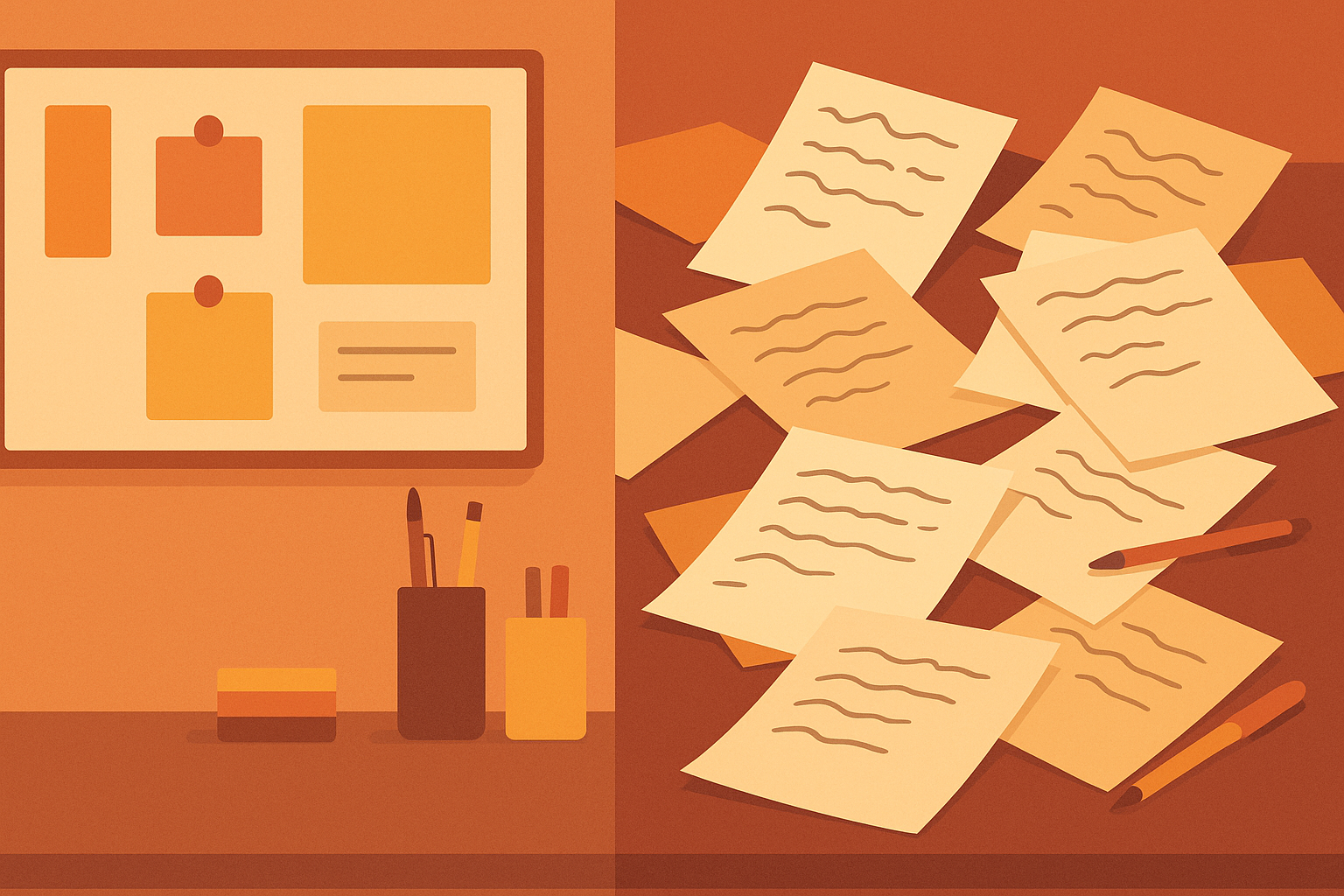
Plotters build the map before the journey. They know the ending before they write the beginning. Ada in Lagos might have a spreadsheet, a chapter-by-chapter beat sheet, character wikis, and a colour-coded timeline pinned above her desk. When she sits down to write, the "what happens" is settled — she's just choosing the words.
Pantsers write "by the seat of their pants." They start with a spark — a voice, an image, a first line that won't leave them alone — and discover the story by writing it. Chidi in Accra opens a blank page with only a mood and a question, and finds out what his character does at the same moment his readers will.
Plotting is architecture. Pantsing is archaeology. One builds the cathedral from a blueprint; the other digs until the bones of the story appear.
Neither is more "real" as a writer. The trouble starts when we pretend one method is virtuous and the other is lazy. They're just different routes to the same place: a finished chapter someone can't stop reading.
What Each Style Does Beautifully — and Where It Breaks
Plotting: strengths and failure modes
When it works, plotting is a gift to your future self. You rarely write yourself into a corner. Foreshadowing lands because you knew what you were foreshadowing. Subplots converge on purpose. For serial writers especially, an outline is insurance: you won't promise a mystery in Chapter 3 and forget to solve it by Chapter 20.
The failure mode is stiffness. Sometimes the outline becomes a cage. Characters want to surprise you, and you refuse them because "that's not in the plan." The prose can read like someone connecting dots rather than living inside a moment. And some plotters never actually draft — they polish the outline forever, mistaking planning for progress. An outline you never write from is just a very organized daydream.
Pantsing: strengths and failure modes
Pantsing keeps the writing alive. The energy of discovery bleeds onto the page; readers feel it. Dialogue crackles because you're hearing it fresh. Amara in Nairobi swears her best twists arrive only when she has no idea they're coming — because if she can't predict them, neither can her readers.
The failure mode is the swamp. Around the middle, pantsers often stall, unsure where the story is heading, and abandon the draft. Plot holes multiply. You might spend three chapters with a character who turns out to matter to nothing. For a novelist who can rewrite everything later, that's fine — messy first drafts are normal. For a serial writer who has already published those chapters, it's a genuine problem you can't take back.
Meet "Plantsing": Beats Plus Discovery
Here's the secret most working authors already know: almost nobody lives at the extremes. The sweet spot is plantsing — a light skeleton of beats, with room to discover the flesh.
The idea is simple. You commit to a handful of load-bearing moments — the ones you're confident about — and you stay deliberately vague about everything between them. Think of it as knowing your bus stops without deciding the exact streets.
A plantser's plan might be a single page:
- The hook — what pulls readers into Chapter 1.
- The turn — the moment the situation flips and there's no going back.
- The midpoint — a revelation or reversal that raises the stakes.
- The dark moment — where it looks like all is lost.
- The landing — roughly how it resolves, even if the details shift.
Between those stones, you pants freely. You get the safety net of a plotter and the electricity of a pantser. When Zainab in Kumasi discovers a better subplot mid-draft, she checks it against her five beats — does it still get me there? — and adjusts one stone instead of scrapping the whole map.
A Quick Self-Diagnosis
You don't need a personality test. Answer these honestly and count your leanings.
- You get a shiny new story idea. Do you A) immediately start writing a scene, or B) start jotting what happens and how it ends?
- A blank outline document makes you feel A) trapped and bored, or B) safe and excited.
- Your drafts most often die because A) you got lost in the middle, or B) you lost interest once you'd "solved" the whole thing on paper.
- Your best ideas arrive A) while writing, or B) while planning in the shower.
- When a character does something unplanned, you feel A) delighted, or B) anxious.
Mostly A — you're a natural pantser; a few beats will save your middles. Mostly B — you're a natural plotter; leave yourself deliberate blank spaces so the writing stays alive. A genuine mix — congratulations, you're already plantsing; lean into it on purpose. There's no wrong result here, only useful information about where your process needs reinforcing.
Process Tips, Especially for Serial Writers
Publishing as you go changes the maths. You can't quietly rewrite Chapter 4 after two thousand people have read it, so your process has to protect continuity. If you're new to the rhythm of releasing installments, our guide on how to publish chapter by chapter walks through the cadence.
If you lean plotter:
- Outline in pencil, not ink. Let the plan serve the story, not the reverse.
- Write a one-line "promise" for each arc so you always deliver what you set up.
- Resist perfecting the outline. Draft before the planning high wears off.
If you lean pantser:
- Keep a running "bible" as you write — a simple file of names, ages, eye colours, and the rules of your world. Serial readers will notice if Kwame's sister changes names between chapters.
- Draft a buffer. Stay two or three chapters ahead of what you publish, so a mid-book discovery can ripple forward before readers see the seams.
- End each chapter with a small open question so you always know what the next one must answer.
For everyone, whatever your camp:
- Protect a daily rhythm. Something modest and repeatable — say, aiming for around 1,000 words a day, adjust to your life — beats heroic weekend binges.
- Track your beats loosely so you can spot when a promise is going unpaid.
- If you want a structured on-ramp from concept to a real draft, follow a 30-day writing plan and let the deadline do some of the thinking for you.
The goal isn't to convert you. It's to help you notice which failure mode is yours — the swamp or the cage — and build one small habit that guards against it.
Your Method Is the One That Finishes Books
Here's the thing nobody says loudly enough: readers can't tell whether you outlined. They can only tell whether the chapter landed. Plotter, pantser, or proud plantser, the only method that counts is the one that gets words finished, published, and paid for.
So stop auditioning for the "right" way to write. Pick the approach that fits your brain today, keep the one habit that saves you from your favourite failure, and put it to work. Open your dashboard, start your book, and write the next chapter your readers are already waiting for.
Comments
0 comments