Turning Your Passion for Writing into a Side Income
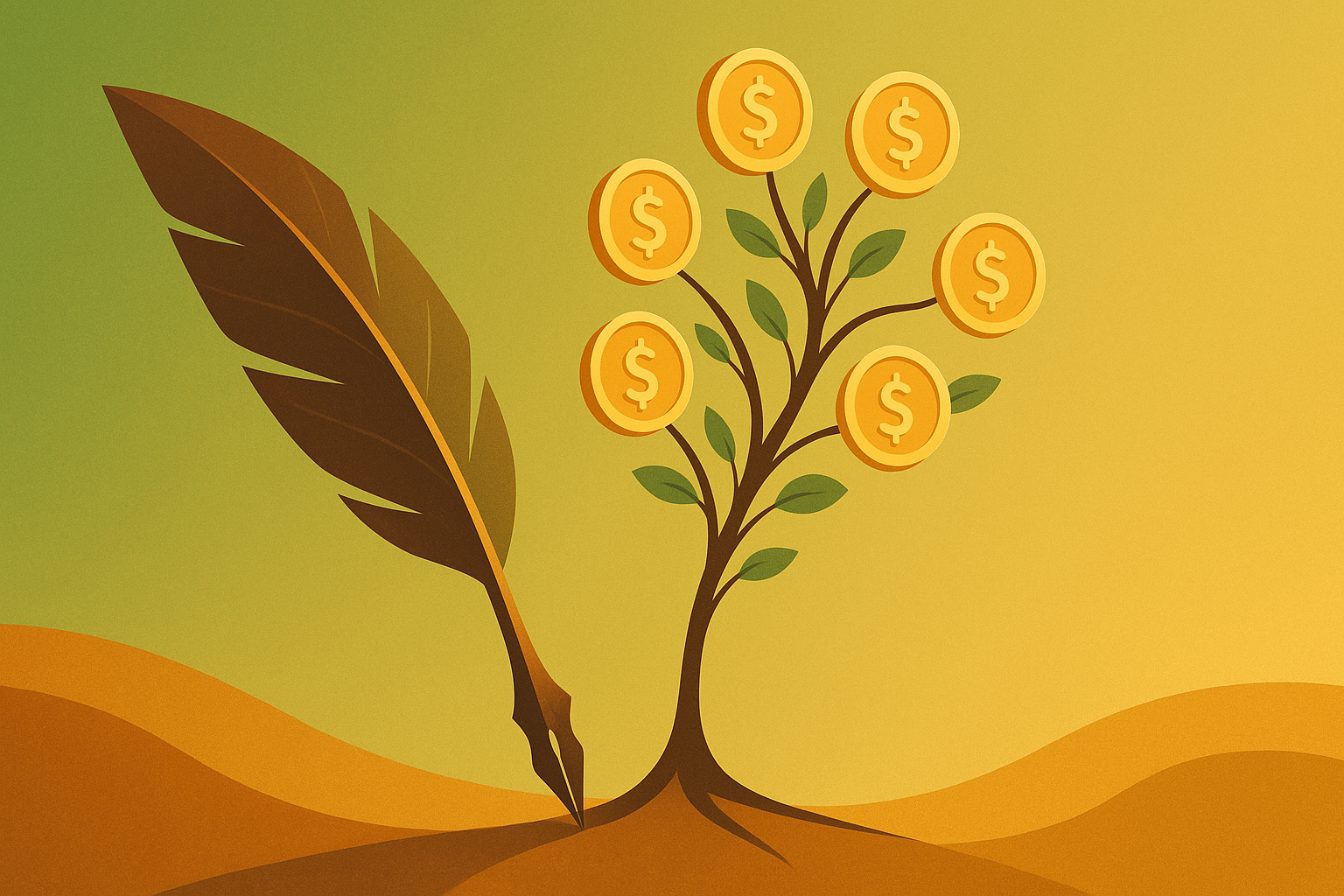
You have a story living in your head that will not leave you alone, and somewhere between chapter three and midnight, a quiet thought sneaks in: what if this could actually pay for something? It can. Not by accident, and not overnight, but through a build you can genuinely start this week.
Let us be honest from the first line, though, because you deserve that. Earning from writing online is not a lottery ticket you scratch and pray over. It is closer to running a small stall at the Kumasi market — you show up, you learn what your customers love, you get a little better every day, and the takings grow. So let us talk about how writers actually turn a passion into a side income, and which myths to leave at the door.
The myth of the big break
The old story goes like this: you finish a manuscript, a publisher in a faraway city discovers you, hands you a cheque, and your life changes on a Tuesday. It happens to roughly the same number of people who win the lottery, and planning your career around it is about as wise.
The new story is quieter and far more reliable. You publish a chapter. A few readers find it. Some come back for the next one. A handful care enough to spend a little to keep reading. Repeat that across weeks and months, and you have built something a single lucky break could never give you: an audience that shows up for you specifically.
A book deal is a door someone else opens for you. An audience is a door you learn to build with your own hands — and it stays open.
That shift matters because everything else in this article depends on it. Income online is downstream of readers, and readers are downstream of showing up.
Consistency beats brilliance (most days)
Here is the least glamorous secret in the whole game: the writer who posts a decent chapter every week will almost always out-earn the genius who posts a masterpiece twice a year. Readers of serial fiction are subscribing to a rhythm, not just a story. Break the rhythm and they wander off to someone who kept the appointment.
You do not need to write a lot at once. You need to write a little, often.
- Pick a cadence you can actually keep — one chapter a week is a fine, sustainable target for most people with a day job.
- Aim for a modest daily word count as a suggestion, not a whip. Even 500 words before breakfast adds up to a chapter a week and a novel a year.
- Bank chapters ahead when inspiration is generous, so a rough week does not break your streak.
- Tell readers when the next one lands, and then land it. Reliability is a form of respect, and readers reward it.
Amara in Lagos who posts every Sunday for a year will have fifty-two chapters and a readership that plans its weekend around her. Chidi who waits for the muse will have three brilliant chapters and an empty comment section. Be Amara.
Where the money actually comes from
There is no single income stream in writing — there are several small ones that stack. Think of it less like a salary and more like a market stall with a few different goods on the table.
1. Chapter unlocks
The most direct path is letting readers spend coins to unlock your premium chapters. You keep your opening chapters free so new readers can fall in love with your world, then lock the later ones so the people who are hooked can pay a small amount to keep going. It is gentle, it is fair, and it scales beautifully: the same chapter can be unlocked by one reader or one thousand. We wrote a full walkthrough on how to make money locking chapters — read it before you lock a single one, because where you place the lock matters enormously.
2. Competitions
Contests do two jobs at once. They can put real prize money in your wallet, and — win or lose — they drop your work in front of readers who would never have found you otherwise. A shortlist mention can bring a wave of new followers who then stay for your serial. Treat every open contest as free marketing with a cash prize attached, and enter a competition whenever your work fits the brief.
3. A growing following
This is the compounding one. Every new reader who follows you makes your next chapter, your next contest entry, and your next locked arc more valuable, because you are no longer starting from zero each time. Your following is the asset the other income streams borrow against. If you only invest in one thing this quarter, invest here — and we have a practical guide on how to grow your readership that goes well beyond "post more."
Community is not a nice-to-have
New writers treat comments and community as background noise. Experienced earners treat them as the engine room.
When Zainab in Nairobi replies to every comment on her chapter, three things happen. The reader feels seen and comes back. Other readers see an author who cares and decide to stick around. And Zainab learns, in real time, exactly which twists land and which characters her audience would pay to spend more time with. That last one is priceless — it is market research your readers hand you for free, if you bother to listen.
- Reply to comments, especially in your first hundred readers, when each one counts double.
- Ask questions at the end of chapters — cliffhangers work, but so does "what would you have done?"
- Cheer on other writers. The authors who lift others tend to get lifted right back, and readers of similar stories are your readers too.
Realistic expectations, honestly
So what should you actually expect? Early on, probably less than you hope. Your first locked chapter might earn enough for a nice lunch, not a rent cheque, and that is completely normal — it is a signal that the machine works, not a verdict on your talent.
The writers who succeed are the ones who read that first small payout correctly: as proof, not disappointment. They keep the cadence. They tend the community. They enter the contests. They study which chapters get unlocked most and lean into what readers clearly want more of. Six months of that looks nothing like week one.
Treat your first payout the way a farmer treats the first green shoot — not as the harvest, but as evidence the soil is good. Then keep watering.
A few grounded truths to hold onto:
- It is a build, not a windfall. The graph goes up and to the right, slowly, then faster.
- Multiple small streams beat one big hope. Unlocks plus contests plus a growing following is sturdier than betting everything on one.
- Your back catalogue keeps working. A chapter you wrote in March can still be earning in November. You are stacking assets, not trading hours.
- The skill compounds too. You get faster and better, so later chapters cost you less effort and earn you more.
Start smaller than you think
The biggest mistake is waiting until the plan is perfect. It never will be. The writer who publishes an imperfect first chapter today is a year ahead of the one still outlining in their head, because they have started collecting the one thing that matters — readers — while everyone else is still theorising.
So do the small brave thing. Open your dashboard, create a new book, and post that first chapter this week. Keep the opening free, invite people in, and let the rhythm do its quiet work. Your future self — the one with a following, a back catalogue, and a wallet that actually holds something — is built one ordinary Sunday at a time. Ready to plant the first shoot? Go ahead and start earning.
Comments
0 comments